Thou emptiest again

.

2 of a short series of 3

This frail vessel thou emptiest again and again, and fillest it ever with fresh life … This little flute of a reed thou hast carried over hills and dales, and hast breathed through it melodies eternally new

Rabindranath Tagore
Gitanjali – ‘Song Offerings’

Yesterday I wrote about a walk, some birds, and Carl Linnaeus, the great Swedish botanist who spent his lifetime naming creation — only to have his own names taken from him in the end. Adamah to adamah. Dust to dust. Many a different name is given to us in the course of a lifetime. And many are taken from us, too – you might like to pause for a moment to think of yours. Anyway, something in yesterday’s piece seems to want to continue.

Reflecting afterward on Rabindranath Tagore, led on to thinking of W B Yeats — who wept reading Tagore’s Gitanjali on a London train in 1912, and confessed, in the manner of his era, to being ashamed of his tears. I understand the weeping. I am not, though, ‘ashamed’ of tears. Tear-washed eyes, I’ve learned, so often come to see more clearly.

Gitanjali — the title means ‘Song Offerings’ in Bengali — opens with an image that has stayed with me, the grandson of an accomplished clarinetist, for years: the image of the flute. A reed, hollowed out, carried over hills and dales, (and in my grandfather’s case, up the Khyber Pass on his twenty-first birthday), breathed through until it yields melodies eternally new. The emptied vessel as the condition of music.

Yesterday I wrote of Troglodytes troglodytes, the Wren named twice over as ‘cave-dweller’ — that tiny, tuneful creature whose song pours out of darkness and hollow places. Perhaps the cave and the flute are the same image. Perhaps they always were.

Tagore’s theology is essentially panentheist — shaped by the Upanishads and by the ecstatic Baul tradition of Bengal, which insists that the divine is not above or beyond creation but woven into its very tissue. He would have recognised our Wren immediately.

But here I want to introduce a voice perhaps less familiar — one that Tagore himself so revered that he undertook to translate him into English.

Kabir was a 15th-century weaver-mystic, born in Varanasi, perched on the crescent-shaped western bank of the Ganges River in north-central India (modern-day Uttar Pradesh), around 1440, who wove cloth by trade and verses by vocation, and saw no essential difference between the two. He belonged to no single tradition; Hindu, Muslim and Sikh teachers all claim him, because he stubbornly refused to let the divine be housed in any one building or adequately named by any one name. He wrote: I have been thinking of the difference between water and the waves on it.

That is panentheism distilled to eleven words. The waves are real — the Blackbird is real, Turdus merula singing its Latin heart out in a Lake District morning is entirely and gloriously real — and yet never for a moment separate from the water that bears them. The Universe doesn’t dwarf the wave. It is the wave.

The medieval Christian tradition spoke of the donum lacrimarum — the gift of tears — as a mark not of weakness but of spiritual sensitivity: the heart permeable enough to be moved. Yeats had it. Tagore had it. Kabir, I suspect, wept at his loom.

Something is taking shape in these morning walks and the writing they give rise to — a small series arising not from plan but from encounter. The Swedish botanist. The Bengali poet. The Varanasi weaver. All of them, in their different ways, saying the same thing: pay attention, name carefully, hold lightly. The vessel is frail. The music is not.

The cantus firmus endures. The song continues …

.

go to the first in a series of three

.

archive – a list of all earlier posts

HOME

An Abiding Hum

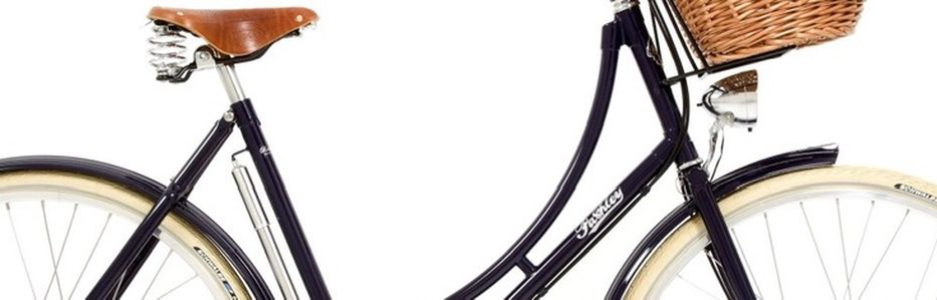
Royal Dutch Gazelle Grenoble

For years my bikes have brought me such comfort. I’ve been reflecting on why. The first – not a bi – but a tricycle. Three of them gifts. Two tandem bikes. Some of them e-bikes. All with bells. One with a hooter, too. All lie behind this blog’s name: wind in my wheels (link) – a comforting and rejuvenating sound I hear, awake and asleep.

And here lies answer in part to my musings. The sound of the wind in my wheels, no matter the particular machine, equates to An Abiding Hum, something like the Universal ‘Om,’ something like the ‘cantus firmus’ Michael Mayne wrote of in his ‘The Enduring Melody’ (link). Something governing, something steadying, at the heart of spinning planets, spinning earth, and the spinning consciousness and conversation of our always-thus-far fractious humankind. It’s a quiet hum, yet it can be heard above and beneath the louder, demanding noises of our ego-fuelled obsessions, our wants and ever-talkative monkey-minds – our human existence.

At many times and in many places the wind in my wheels has led, and still leads me into the Psalmist’s ‘pastures green’ and to the ‘quiet waters by.’ The hum recalls me to the spaces of gratitude and acceptance, to the reckoning with failures and successes – and to some appreciation of the purpose in our lives of both; to the places of quiet growth, the places where one can think upon the miracles of life on earth. The places where one gains perspective. I learned today that Mount Everest grows in height by millimetres every year due to tectonic plate disturbances. Mountains and humans – perhaps all things – ‘grow’ because the ground is forever shifting beneath our feet!

And the thing about being out alone on a bike, about the unselfconscious ‘good morning’ to birds and cows, horses and sheep, about the hum, about the ‘Om,’ about the ‘wind in my wheels’ – is the comforting reminder that something ‘Other’ than us ensures the balancing, the Abiding Hum, a sustaining, in joy and sadness, in sickness and in health, in life and death, in every sense, in this world and in all worlds. And for those who don’t ride bikes: no problem. All you need is to deliberately sit or stand or lie down somewhere quiet for a while. Soon you may hear the ‘cantus firmus’ and – should you be hearing it for the first time, no worries. After the first hearing this is a sound, this is a prayer, this is a steadying, this is a song you may come to hear again and again.

Wind in my wheels. An abiding – a persistent – Hum

Brompton
.

.

archive – a list of all earlier posts

HOME

Without love

.

Roger Housden once again reaches into the soul of me in a short chapter on Mary Oliver’s West Wind #2

There is life without love.

Mary Oliver is speaking directly to that part of you and me that knows, however faintly, that when we rush into life, when we leap into action without any connection to the deeper currents that move through us always, we are acting without love. Our oars thrash at the water, and we break the gossamer web of life this way.

There is indeed a life without love, she says. It is quite possible to live a life in which your soul plays no part. You can jump up and down with every passing impulse, and never hear the whispering call that is there all along.

Yes: the cantus firmus – the enduring melody. That’s the note and that’s the song that I’m trying daily to listen out for. Of course there’s life without love, but such a life is not what we were made for.

… when you feel the mist on your mouth and sense ahead the embattlement, the long falls plunging and steaming – then row, row for your life toward it.

archive – a list of all earlier posts

Lament

.

Caoineadh Cú Chulainn, Bill Whelan
Uilleann Pipes, Tara Howley

This is lament and love for an entire culture: a piece about mourning Cú Chulainn, a warrior hero and demigod in the Ulster Cycle of Irish mythology, as well as in Scottish and Manx folklore. The underlying ‘drone’ of orchestral harmonies that are gradually heard here, like ‘dawn’ behind and around the lone (in this case, female) Uilleann piper, may bring tears to your eyes. Our lives are surrounded and supported by ‘other’ sounds – the cantus firmus, the enduring melody.

Friends have responded to a musical note at the end of my piece about Riverdance the other day: that it might usefully take up a post in its own right. ‘Lament’ has a place in all our lives as an encourager of reflection, a being present to what is, now, and an invitation to hope for the future, even when ‘the times’ feel bleaker than bleak – immense courage notwithstanding. This morning I heard a young girl, a seven year old soloist, beautifully singing the Ukranian National Anthem in a crowded Polish stadium. I cried. And I cry out, reaching for hope and harmony. Riverdance (and all that the notion of a river’s ‘dance’ might imply) came to mind, in company and in harmony with treasured friends, and again and again I have listened to the depth in this Lament – and invite you today, in the coming days, and months and years, to listen and to lament too – because harmonies do dawn – quietly, courageously, and persistently. And tears carry pain away down-river – to join in the being held, by a vast ocean.

🌱🙏🇺🇦🙏🌱